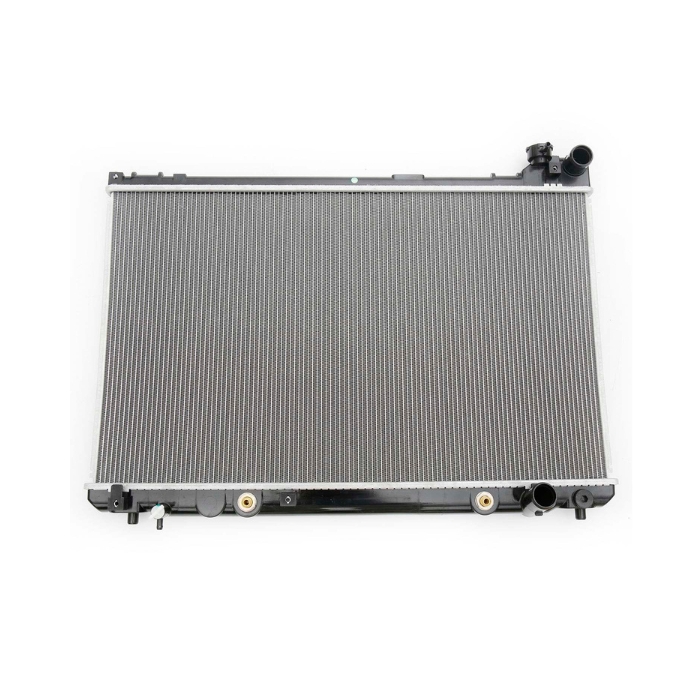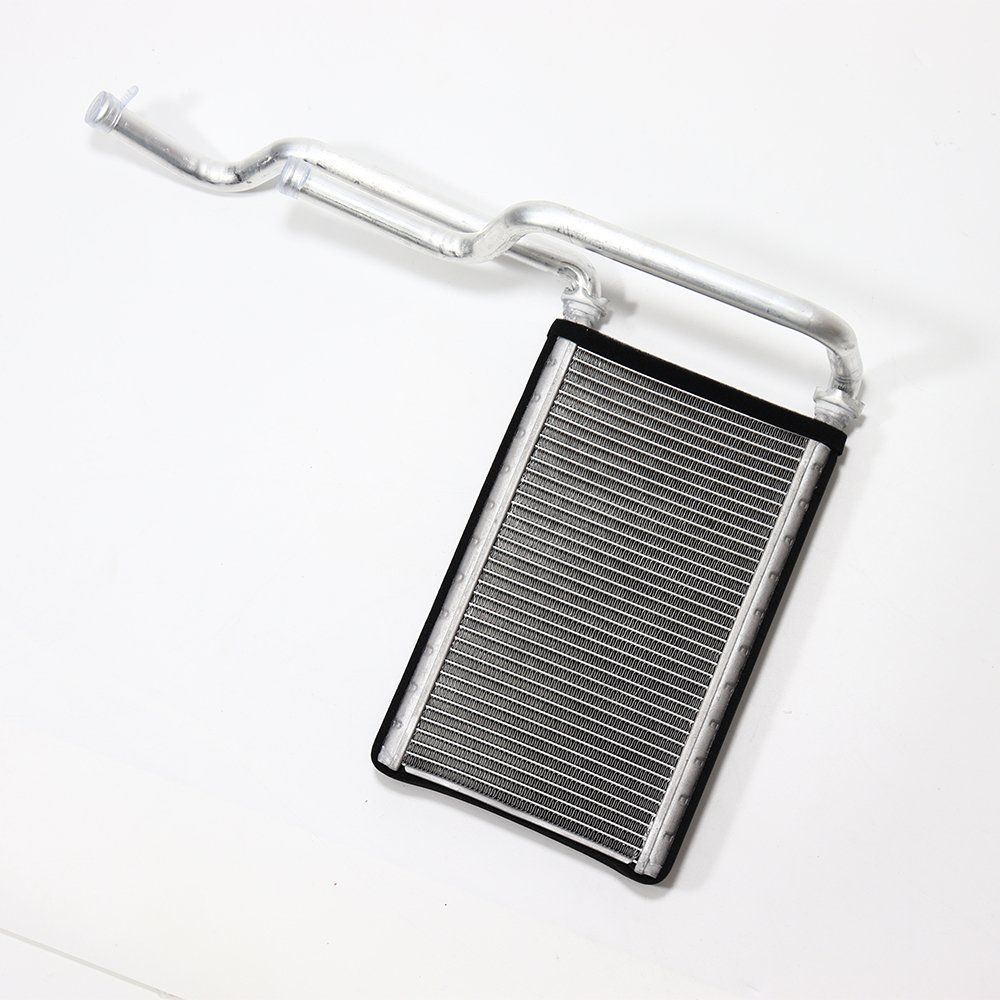
Radiators Factory Testing

Inside Juyon Radiators: The Four Factory Tests That Decide Whether a Radiator Survives Ten Years on the Road
01 Premium Aluminum, Superior Performance
Heat dissipation is a material property first and a design property second. Aluminum offers roughly three times the thermal conductivity of steel at a fraction of the weight, which is why modern radiators, charge air coolers and heater cores have all migrated to aluminum construction. But "aluminum" alone says very little — the difference between a radiator that lasts a season and one that lasts a decade sits in the details of the strip.
Juyon Radiators use high-purity aluminum from Hercules Company ensures exceptional quality stability and durability.
High thermal conductivity is good for optimal cooling; Thickened aluminum structure resists deformation under high temperatures; Special surface treatment effectively prevents scaling and corrosion .
Consistency is a machine property. Human hands are excellent at solving problems and poor at repeating the same motion ten thousand times.
Air tightness has a direct relationship with assembly repeatability. A core that is stacked with slightly uneven fin compression, or brazed with a slightly different thermal profile, will pass the leak test today and fail in the field eighteen months later. Automation removes that variance.
02 Automatic Assembly
Where automation does the work
A coolant leak is the single most expensive failure mode in this product category, because the damage is never limited to the radiator. Lost coolant leads to overheating, warped heads, failed head gaskets and — in transmission oil coolers built into the tank — destroyed gearboxes. A warranty claim on a leaking radiator routinely costs several times the part's selling price.
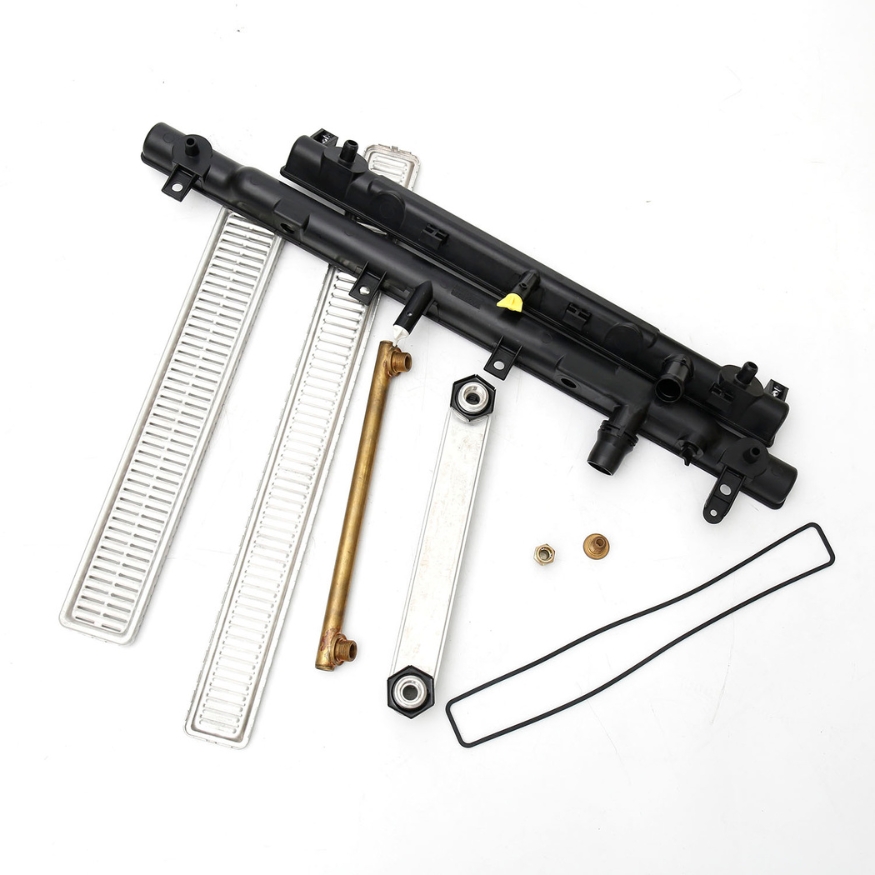
Once tanks, inlet/outlet necks, oil cooler fittings and mounting brackets are in place, the complete unit will be strictly tested .It is very essential, because crimped or welded tank seams are a separate failure path from the core itself. Besides, before packing, a final verification will be made to ensure that the fully dressed radiator has not suffered handling damage introduced during bracketing, painting, and transport within the plant.
"Safety" in radiators has two meanings — safe in the box, and safe on the vehicle. We treat both as part of the same deliverable.
Every unit is pressure-tested — after brazing, again after final assembly, and once more before packing. Sampling is used only for destructive burst testing, which validates design margin on a statistical basis.
Yes. Automated assembly is built to run product families to drawing, which makes private-label cartons, custom bracketing, custom inlet/outlet configurations and customer part numbering straightforward rather than a special project.
Vehicle make, model, year and engine, or an OEM / competitor part number. A photo of the original unit with the tanks and necks visible resolves most fitment questions immediately.
Batch-level records cover incoming coil verification, brazing furnace parameters and leak-test results, all linked by batch code to the cartons shipped. Auditors can follow a delivered carton back to the coil lot that produced it.
Contact us for good business ! Email :info@juyonradiators.com
03 Strict Air Tightness Check
Leak testing is where a radiator factory either earns its reputation or loses it. Sampling is not enough.
How we test
04 Safety Package
Full-range cushioning protection ;7-Layer Reinforced Carton, Anti-crush and shockproof, ensuring zero damage during transit .
Juyon also provides vacuum package, which forming process provides dust-proof and oxidation-resistant properties, maintaining a clean and attractive appearance while extending product life.
Frequently asked questions
Do you leak-test every radiator, or only sample them?
Can Juyon Radiators produce private-label and OEM orders?
What information do you need to quote an aluminum radiator?
How is quality documented for a buyer's audit?