How to Evaluate Radiator Quality Before Bulk Ordering
A sample tells you what a factory can make. A batch tells you what it actually makes.
Radiator defects rarely show up in the first month. A weak brazed joint or a marginally sealed tank passes a quick check, then fails a leak test in month nine — in a customer's workshop, in front of the end user. By then the argument about who pays is already lost.This guide covers the four things worth checking before you commit to a bulk order: what to verify on paper, which tests actually matter, what you can see yourself, and how to inspect a batch.
Why a good sample proves less than you think
Samples are drawn from controlled production, often with extra attention. Bulk orders involve production pressure, multiple shifts, tooling wear and changing material lots.
So the quality question is not "can this factory make a good radiator?" — it is "does this factory make good radiators consistently, on the 4,000th unit, when nobody is watching?"
That splits into three things worth evaluating separately:
• Capability — certificates, equipment and process control
• Verification — test data proving the product meets specification
• Consistency — the system that keeps batch 10 identical to batch 1
1. What to verify before you order
1)Certifications. IATF 16949 is the strongest single signal for a radiator manufacturer, because it requires documented process control and traceability, not just a final inspection. ISO 9001 is the baseline. Verify two things independently: that the certificate is still valid, and that its scope actually covers heat exchangers — a valid certificate for a different product category tells you less than you think.
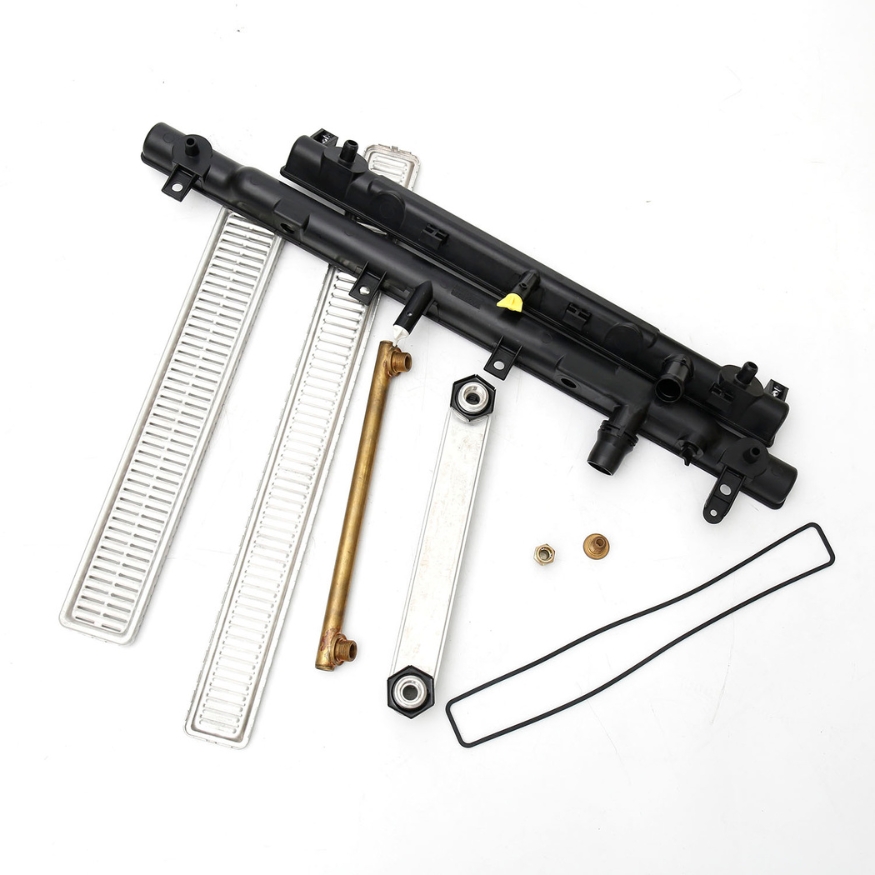
2)The specification sheet. Quality cannot be evaluated without a specification. Get these in writing: core dimensions and tolerance, fin density (FPI), tube and header material grade, tank material (PA66-GF30 for plastic), brazing method (CAB/Nocolok or vacuum), the test regime, and the OE reference number the part is benchmarked against. If a supplier cannot provide this, they cannot be held to it.
3)Brazing quality. This is where a radiator lives or dies. Ask for the brazing rate (钎着率), measured by cross-section metallography — a serious factory targets ≥95% joint bonding. Then ask to see a cross-section of your part. If they cannot or will not show you one, that is your answer.
2. The six tests that actually tell you something
Any factory can run a basic air pressure test. These are the tests that separate a controlled process from a hopeful one.
|
Test |
Standard reference |
Typical pass criteria |
|
Burst pressure |
Internal / EN 468 |
≥1.5× working pressure without rupture |
|
Helium leak detection Internal |
Internal / SAE J194 |
Leak rate ≤10⁻⁶ mbar·L/s |
|
Pressure pulse fatigue |
SAE J2562 |
200,000 cycles at 0.1–0.3 MPa |
|
Neutral salt spray |
ASTM B117 / ISO 9227 |
1,000 hours, rating ≥9 |
|
Thermal shock / cycling |
ISO 16750-4 / SAE J1638 |
−40 °C to 120–135 °C |
|
Vibration fatigue |
ISO 11452 |
10–500 Hz sweep, no failure |
Two ways to read these numbers. Burst at 1.5× is a minimum — hot-climate systems with pressure spikes should be specified higher. Salt spray at 1,000 hours is the meaningful threshold for coastal markets; "salt spray tested" without a duration and a rating means nothing.
Ask for the actual reports, with dates and batch references — not a marketing page.
3. What you can check yourself
You do not need a laboratory to catch the most common defects:
• Fin density — count fins per inch at several points. Inconsistent or visibly sparse fins are the most common cost-cutting shortcut.
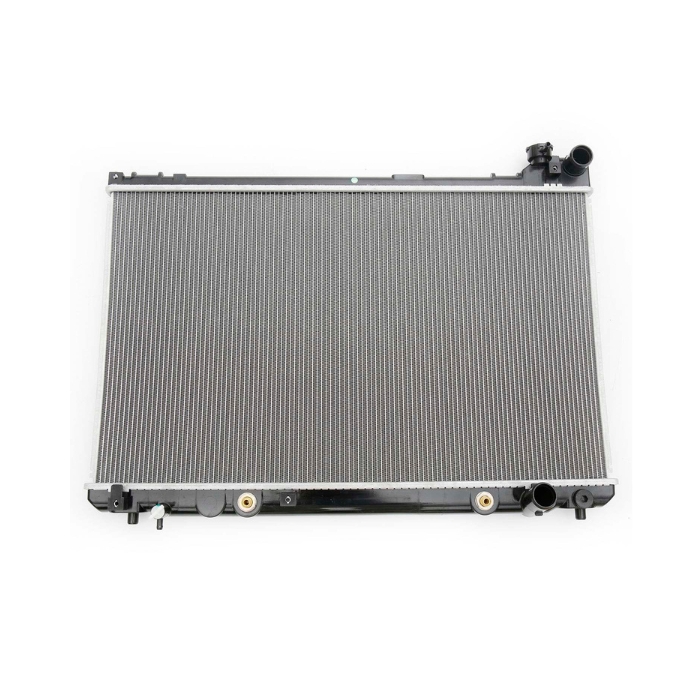
• Brazing joints — uniform fillets along the tube-to-header seams; gaps, voids or a chalky unfinished look mean weak bonding.
• Tank crimp — the tank-to-core crimp should be even all the way round. Uneven crimping is the classic precursor to a leak.
• Fitment — block fittings, hose ports and brackets should align with the OE part without force. Misalignment costs labour on every installation.
• Internal cleanliness — shake and flush a sample. Brazing flux residue inside the core will find its way into the system.
4. How to inspect a bulk order
Inspection at volume has to be statistical. The standard framework is ANSI/ASQ Z1.4 (formerly MIL-STD-105E), with three defect classes:
|
Defect class |
Definition |
Typical AQL for auto parts |
|
Critical |
Safety hazard or illegal issue 0 |
0 — zero tolerance |
|
Major |
Functional failure or obvious quality problem |
1.0–1.5 |
|
Minor |
Cosmetic, unlikely to affect the user |
2.5–4.0 |
Put the AQL level, sampling plan and defect definitions in the purchase order. If they are not in writing, you are relying on whatever the inspector decides on the day.
Three rules that decide whether the inspection protects you:
• Book pre-shipment inspection at 80–100% of production and packed — 2–3 working days ahead, with the whole lot sealed before arrival.
• The inspector picks the sample, not the factory. Letting factory staff choose units is the most common way an inspection gets neutralised.
• Escalate non-sampling defects immediately. A wrong material or wrong component is a systemic problem, not a random one — the AQL arithmetic does not apply.
5. If you visit the factory, look at process
Skip the showroom. Useful questions: are the gauges and test equipment calibration stickers in date? Does the brazing line keep furnace temperature and atmosphere records? Is the leak test station in-line, testing 100% of units, or a sampling bench off to the side? Can they trace a finished radiator back to a material lot and production date? Do first-article inspection reports exist for recent runs? Are there obsolete, uncontrolled drawings on the production floor?
This is not administrative overhead. Documented sourcing practice shows defect rates on received goods falling from roughly 20%+ without systematic QC to under 3% with factory audit and PSI combined — on a US$100,000 order, the difference is measured in tens of thousands.
6. Keeping batch 1 and batch 10 identical
Build four things into your supply agreement:
• Golden sample retention — a sealed, signed reference held by both parties
• Batch test records — with every shipment
• Return rate tracking by batch — your real quality metric
• Change notification — material, supplier or process changes disclosed before shipping
A factory that resists these four already has a quality system that is not working.
FAQ
Q: What certificates should a radiator factory have?
A: At minimum ISO 9001; for automotive supply, IATF 16949 is the meaningful standard because it requires documented process control and traceability. Also ask for product-level test reports covering pressure, burst, corrosion and thermal performance — and verify certificates with the issuing body, since they expire and are scope-limited.
Q: What is a good brazing rate for an aluminium radiator?
A: At least 95%, measured by cross-section metallography. Ask to see a cross-section of your part — it shows actual joint bonding rather than a claim about it.
Q: How many hours of salt spray should a radiator pass?
A: 1,000 hours of neutral salt spray (ASTM B117 / ISO 9227) with a rating of 9 or better, especially for coastal and humid markets.
Q: Should I use third-party inspection for a first order?
A: Yes. An AQL-based pre-shipment inspection booked at 80–100% production, with the inspector selecting the sample. Audit plus PSI is the combination that most reliably reduces defect rates.
Source radiators with quality you can verify
At JUYON Radiators, quality is not something you have to take on faith. We manufacture car radiators, condensers, evaporators and thermal management components under an ISO 9001 quality system, leak-test 100% of units, and share batch test records with every shipment.
Ask us for the specification sheet, the cross-section, and the test reports for the part you are considering. We would rather you audit us properly than buy on a promise.
Email:Info@juyonradiators.com