How to Source Auto Condensers from China: A Complete B2B Guide
How to Source Auto Condensers from China: A Complete B2B Guide
The right condenser supplier gives you AC parts that fit, cool, and last — at a price that protects your margin. The wrong one gives you returns, warranty claims, and customers who never come back.
Condensers are one of the highest-turnover items in automotive air conditioning, and China is where most of the world's aftermarket condensers are made. But "made in China" covers everything from OE-quality, factory-certified production to thin-core parts that fail in one summer. This guide walks through how condensers differ from radiators, the types you'll encounter, the factors that determine quality, and exactly what to check before placing your first bulk order.
What is a car AC condenser — and why sourcing it well matters
A condenser is the component that sits in front of your radiator and turns hot, high-pressure refrigerant gas from the AC compressor back into liquid. If it can't shed heat efficiently, the whole AC system struggles — weak cooling, high pressures, and premature compressor wear.
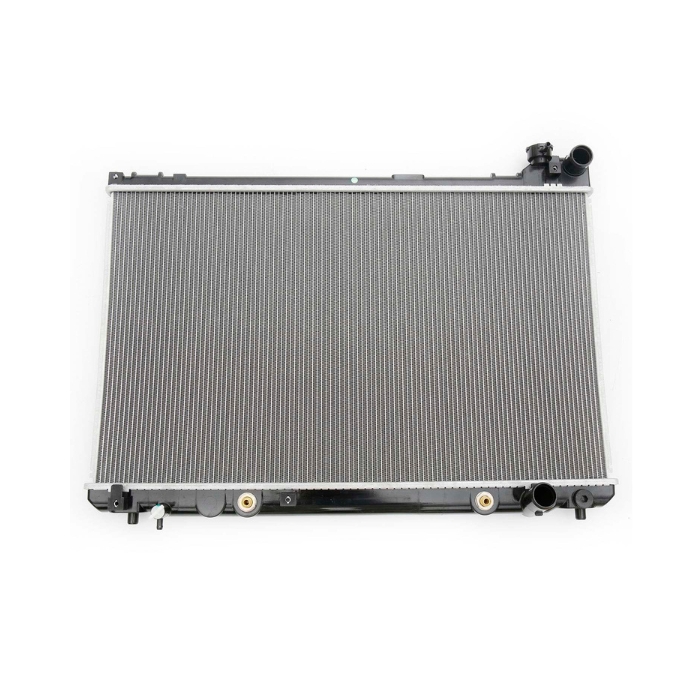
It is easy to confuse condensers with radiators, but they are different systems:
- A radiator cools engine coolant (water and antifreeze).
- A condenser cools refrigerant gas for the air conditioning system.
Because a condenser failure usually shows up as "AC not cold enough" — a complaint that is hard to diagnose and easy to blame on the part — the quality of the condenser you supply directly affects your reputation in the workshop market. A cheap, poorly built condenser can fail a leak test in weeks, and every failed unit costs you the part, the freight, the labour, and the customer.
Condenser types: what you're actually buying
Before you compare suppliers, know which type of condenser your market needs. The three main constructions are:
|
Construction |
Where it's used |
Typical price position |
||
|
Parallel flow |
Multiple flat tubes and corrugated fins in parallel |
Modern cars — the overwhelming mainstream today |
Mid to high |
||
|
Serpentine |
One continuous tube bent back and forth |
Older models, some budget aftermarket |
Low to mid |
||
|
Tube-and-fin |
Round tubes with plate fins |
Classic cars, some light commercial vehicles |
Low |
Parallel flow condensers are the standard for modern vehicles because they transfer heat far more efficiently in a smaller, lighter package. If your customers mostly drive cars built after 2005, this is almost certainly what you need. When a supplier quotes a serpentine or tube-and-fin condenser for a modern application, treat it as a warning sign.
7 factors to evaluate when sourcing condensers from China
1. Certifications and quality systems
A legitimate condenser factory should hold at least ISO 9001. For automotive components, IATF 16949 is the strongest signal of a serious manufacturer — it means the plant has been audited against the automotive industry's toughest quality standard. Ask for certificates up front and verify them; genuine manufacturers share them freely.
2. OE part number matching
The single most important technical check: does the condenser match the OE part number for the target vehicle? Fit is everything — mounting brackets, pipe connections, and dimensions all have to line up. A reliable supplier maintains a cross-reference database and can confirm fitment for the exact year, make, and model you're stocking. If they can't verify fitment, they're guessing — and you'll be the one paying for it.
3. Refrigerant type: R134a or R1234yf
Your market dictates the refrigerant. R134a still dominates the aftermarket in many regions, but R1234yf is now mandatory for new vehicles in the EU and is spreading worldwide. The two are not interchangeable — the condensers have different fittings, pressures, and sometimes different cores. Ask every supplier which refrigerant types they cover and whether they can confirm the correct part for each.
4. Connection and integration details
Modern condensers come in several configurations that must match the vehicle:
- Block fittings vs hose connections — how the condenser connects to the AC lines
- Receiver drier integrated or external — many condensers mount the drier directly on the unit; others require a separate part
- Electric fan / cooling module integration — some vehicles pair the condenser with a fan shroud or share a module
These details are easy to get wrong from a catalogue alone. A good supplier confirms them against the OE part before you order.
5. Materials, brazing, and corrosion protection
Quality condensers are aluminium, joined by Nocolok brazing (controlled atmosphere brazing) or vacuum brazing — processes that produce strong, leak-free joints. Cheaper units may use mechanical assembly or thinner materials that fail under pressure and vibration. Look for consistent core thickness and fin density between samples, smooth uniform brazing joints with no voids, and corrosion protection on the fins — especially for coastal and humid markets.
6. Testing before shipment
A quality factory pressure-tests and leak-tests every unit before packing, and randomly thermal-cycles samples. Ask specifically:
- "Do you leak-test 100% of condensers, or a sample?"
- "What test method do you use — helium leak detection, water bath, or pressure hold?"
- "Do you keep batch test records we can review?"
The factory's answers tell you more about their quality culture than any brochure.
7. Range, MOQ, and lead times
Condenser ranges are usually measured in hundreds of SKUs. You want coverage of the models your market actually sells, with realistic terms:
- MOQ: typically 50–200 units per model for aftermarket condensers; popular models often allow lower minimums
- Production lead time: usually 15–45 days depending on volume and model mix
- Shipping: 10–40 days by sea freight depending on your destination port
Be wary of a supplier who promises everything immediately. Serious factories plan production in batches and give you honest dates.
How to verify condenser quality before you commit
- Order samples first — Buy samples of your top-selling models and check fit, finish, and leak integrity. Better yet, have a trusted workshop install one and run the AC system.
- Request a factory audit — In person, or a video walkthrough of the brazing line and leak-testing station.
- Use third-party inspection — SGS, Bureau Veritas, or similar can inspect before shipment for a modest fee.
- Place a trial order — Start small, evaluate the full experience, then scale.
- Check references — Ask for customers in your region or product segment and follow up.
Pricing, MOQ, and lead times: what's realistic
Condenser pricing depends mainly on type, size, and specification. Parallel flow units cost more than serpentine; condensers with integrated receiver driers and OE-grade coatings cost more than bare cores. Always compare quotes on a like-for-like basis — a cheap quote usually means a thinner core, weaker brazing, or no 100% leak testing. Ask for the specification behind the price, not just the number.
| Item | Typical range |
|---|---|
| MOQ per model | 50–200 units |
| Production lead time | 15–45 days |
| Ocean freight to major ports | 10–40 days |
| Warranty (aftermarket) | 12–24 months |
Shipping and logistics: planning your landed cost
Beyond the unit price, factor in the full landed cost: sea freight, insurance, customs duties, and local delivery. Many B2B buyers source via FOB (free on board) terms and arrange their own freight — a good supplier provides clear packing lists, export documentation, and correct HS codes to keep customs smooth. Condensers are bulky but light; ask how the factory packs them (single units vs multi-packs) because damaged cores in transit are a common hidden cost.
Red flags to avoid when sourcing condensers
- No verifiable certificates — A factory that can't show ISO/IATF documents is not worth the risk.
- Can't confirm OE fitment — If they only have a price list and no cross-reference data, walk away.
- No 100% leak testing — For pressure vessels carrying refrigerant, sampling-only QC means defects will reach your customers.
- Confuses R134a and R1234yf — If they don't understand refrigerant compatibility, they don't understand the product.
- Prices far below the market — Thin cores and skipped testing are how "too good to be true" quotes end up costing more.
- Vague warranty terms — You need a clear, written policy covering replacement and freight on defective units.
Source condensers from a manufacturer you can trust
At JUYON Radiators factory , we manufacture car condensers, radiators, evaporators, and thermal management components with certified quality systems, 100% leak testing on every unit, and honest lead times. Our range covers parallel flow, serpentine, and tube-and-fin constructions , with OE part number cross-reference support and private label programs for B2B buyers.