How to Choose the Right Car Radiator Supplier for Your Business?
How to Choose the Right Car Radiator Supplier for Your Business
The right radiator supplier keeps your stock moving, your quality consistent, and your customers loyal. The wrong one quietly drains your margin through returns, delays, and rework.
Choosing a car radiator supplier is one of the most important decisions a parts distributor, workshop, or e-commerce brand makes. Because a radiator failure is rarely a simple exchange — it usually comes with a disappointed customer, a lost sale, and sometimes a damaged engine. This guide walks through what to look for in a radiator manufacturer, the questions to ask before you commit, and the warning signs that should send you looking elsewhere.
Why the right radiator supplier matters
Your supplier is effectively an extension of your own business. When their quality slips, your customers blame you, not the factory overseas. When their lead times stretch, your stockouts cost you sales. When they communicate well, your planning becomes far easier and your growth far smoother.
A dependable radiator supplier gives you:
- Consistent quality — Radiators that fit properly and perform first time, batch after batch, so your return rate stays low and your reputation stays strong.
- Reliable lead times — Production schedules and shipping commitments you can plan your inventory around, not promises that slip by weeks.
- Competitive pricing — Factory-direct or wholesale pricing that protects your margin while keeping you competitive in your market.
- Range and coverage — A broad catalogue covering the passenger, light commercial, and heavy-duty models your customers actually ask for.
- Flexibility to grow — The ability to add models, private label your brand, or scale order volumes as your business expands.
What to look for in a car radiator manufacturer
Not all radiator factories are created equal. Here's what separates a serious manufacturer from a trading company in disguise.
Certifications and quality systems
A legitimate manufacturer should hold recognised quality certifications. At minimum, look for ISO 9001. For automotive products, IATF 16949 is the gold standard — it means the factory has been audited against strict automotive quality requirements. Environmental certifications such as ISO 14001 are also a good sign of a professionally run operation.
Ask for the certificates and verify them. Any genuine manufacturer will happily share them.
Materials and construction
The materials a radiator is made from determine how long it lasts and how well it cools:
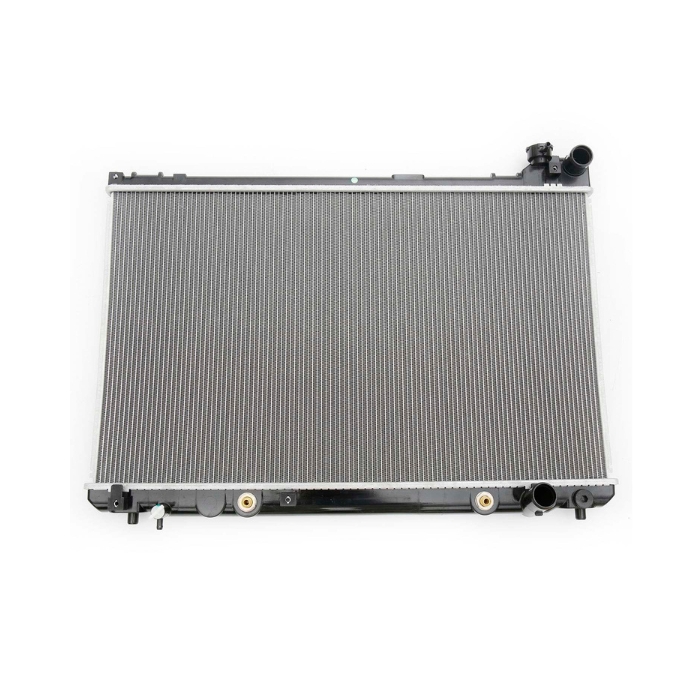
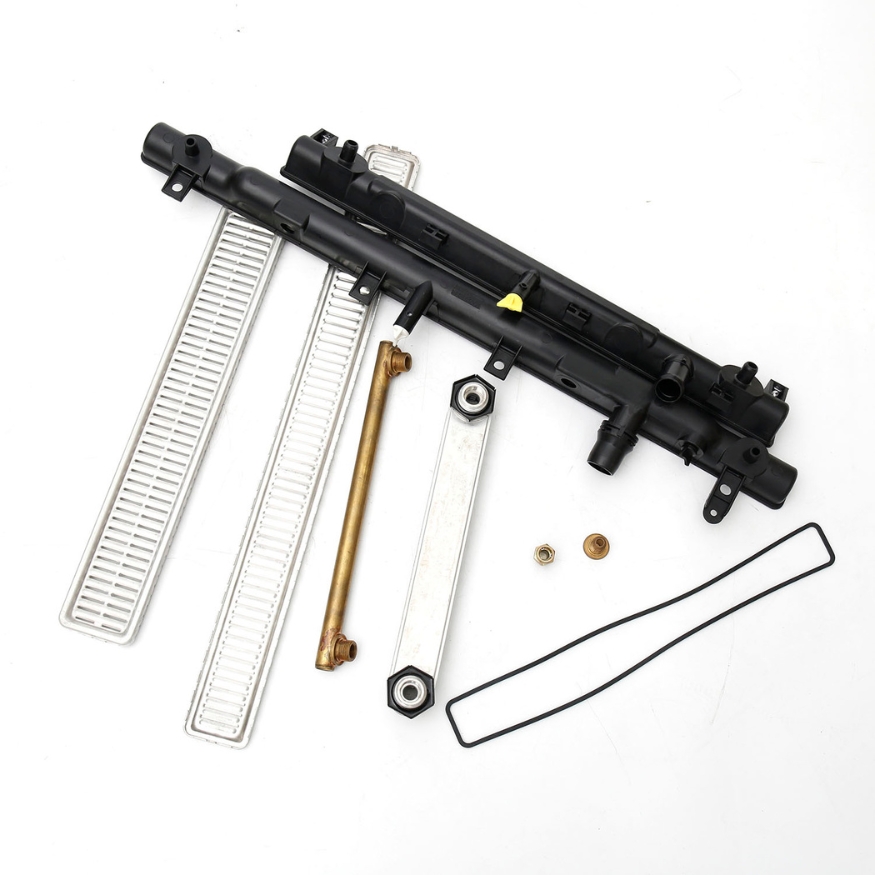
- Aluminium core with plastic tanks — The most common type in modern vehicles. Lightweight and affordable, but plastic tanks can crack over time with heat cycling.
- Full aluminium (alloy) radiators — Stronger, with better heat dissipation and vibration resistance. Common for performance, towing, and heavy-duty applications.
- Copper-brass radiators — Excellent heat conductivity and repairability, but heavier and increasingly rare in new production.
A manufacturer that openly discusses core thickness, fin density, tank construction, and material grades is usually one with nothing to hide.
Manufacturing process and testing
How a radiator is made matters as much as what it's made from. Leading factories use Nocolok brazing (controlled atmosphere brazing) for aluminium cores — a process that produces stronger, leak-free joints than mechanical assembly. Quality radiators are pressure-tested, leak-tested, and often thermal-cycle tested before they leave the factory.
Ask suppliers what testing they perform on every unit versus a random sample. The answer tells you a lot about their quality culture.
Supplier comparison checklist
Use this table to compare candidates side by side. Score each supplier out of five before you make a decision.
| Evaluation area | What to check | Why it matters |
|---|---|---|
| Quality certifications | ISO 9001, IATF 16949, ISO 14001 | Proof of audited, consistent manufacturing |
| Manufacturing process | Nocolok brazing vs mechanical assembly | Brazed cores are stronger and leak-free |
| Testing | Pressure, leak, and thermal-cycle testing | Reduces defective units in your shipment |
| Product range | Passenger, light commercial, heavy-duty coverage | Fewer suppliers to manage as you grow |
| MOQ | Minimum order quantity per model | Must fit your cash flow and stock strategy |
| Lead time | Production time + shipping time | Determines how much stock you must carry |
| OEM/ODM capability | Private label, custom packaging, custom cores | Enables your own brand or special applications |
| After-sales support | Warranty terms, claims process, response time | Protects you when problems do occur |
| Communication | English fluency, response speed, proactive updates | Makes ordering and problem-solving painless |
Questions to ask before you place a bulk order
The fastest way to separate a strong supplier from a weak one is to ask the right questions up front:
- Can you send samples for evaluation? — A real manufacturer will. If they hesitate, treat it as a red flag.
- What is your MOQ, and does it vary by model? — Popular models often carry lower MOQs than niche applications.
- What are your production and delivery lead times? — Get both figures separately, and ask what happens if production runs late.
- Do you offer private label or custom packaging? — Essential if you plan to sell under your own brand.
- What warranty do you provide on your radiators? — Standard aftermarket warranties are typically 12 to 24 months.
- How do you handle defects and warranty claims? — Look for a clear, written policy covering replacement and freight.
- Which vehicle applications does your range cover? — Confirm coverage for the makes and models your market demands.
OEM replacement, aftermarket, or private label?
Know which kind of supplier you need before you start negotiating.
OEM replacement radiators
These match original equipment specifications for fit, performance, and appearance. They are the safest choice for distributors serving customers who demand exact OE quality, and they usually carry a higher price.
Aftermarket radiators
Aftermarket radiators offer a wider range of options at competitive prices. Quality varies significantly between factories, so this is where certifications, testing, and samples matter most. A well-made aftermarket radiator performs as well as OE at a fraction of the price — a poorly made one fails fast and hurts your reputation.
Private label (OEM/ODM) radiators
Many distributors and e-commerce brands choose private label. The factory produces radiators to your specifications and brands them with your logo and packaging. This builds a product identity that customers associate with you rather than the factory, and it often allows better margins.
How to evaluate a supplier before you commit
Don't rely on a sales pitch. Run a structured evaluation:
- Test samples first — Order samples of your best-selling models and check fit, finish, and cooling performance. Better yet, have a trusted workshop install one.
- Request a factory audit — In person if possible, or a video walkthrough of the production line and testing area.
- Use third-party inspection — Services like SGS or Bureau Veritas can inspect your order before shipment for a modest fee.
- Place a trial order — Start with a small order and evaluate the full experience: communication, production, packaging, and delivery.
- Check references — Ask for existing customers in your region or product segment and follow up with them.
Red flags to avoid
If you see any of these, walk away:
- Prices that seem too good to be true — Extremely low quotes usually mean thin cores, cheap materials, or skipped testing.
- No verifiable certifications — A factory that cannot show ISO or IATF documents is not worth the risk.
- Vague answers about materials or testing — If they cannot explain how the radiator is built, they probably do not build it.
- No warranty or an ambiguous returns policy — You will need support when a batch has defects.
- Slow, poor communication before you pay — It will only get worse after you place a large order.
- Reluctance to provide samples or allow audits — Genuine manufacturers welcome scrutiny.
Pricing, MOQ, and lead times: what's realistic
Understanding typical terms helps you negotiate realistically. For aftermarket car radiators, MOQs commonly range from 50 to 200 units per model, depending on the application. Production lead time is usually 15 to 45 days, plus 10 to 40 days for ocean freight depending on your destination port.
Pricing varies with core construction, tank material, and order volume. Always compare quotes on a like-for-like basis — a cheap quote for a plastic-tank radiator is not comparable to an alloy unit with a thicker core. Ask suppliers to break down the specification behind the price.
Build a long-term partnership
The best supplier relationships are partnerships, not transactions. Set up a regular communication rhythm — monthly or quarterly reviews of order forecasts, quality reports, and new model needs. Share your sales data so they can plan production capacity around your growth. A supplier who understands your market becomes an asset that is hard to replace.
Remember that the lowest quote is rarely the cheapest once returns, delays, and lost customers are counted. Value reliability, communication, and quality — the things that quietly protect your margin every single month.
FAQs about choosing a radiator supplier
What certifications should a car radiator supplier have?At minimum, look for ISO 9001. For automotive-grade products, IATF 16949 is the strongest indicator of a quality-driven manufacturer. ISO 14001 for environmental management is a further positive sign.
For aftermarket car radiators, MOQs typically range from 50 to 200 units per model. Niche or heavy-duty applications may have higher minimums, while popular passenger models often allow lower ones.
Production usually takes 15 to 45 days depending on volume and model mix, plus shipping time — typically 10 to 40 days by sea freight depending on your destination port.
Yes. Many manufacturers offer OEM/ODM services including custom core specifications, your logo, custom packaging, and brand-specific part numbers. Confirm this capability before ordering if you plan to build your own brand.
Request samples before ordering, use third-party inspection on early shipments, track your return rate by batch, and hold regular quality reviews with the supplier. Factories with strong testing protocols and certifications are far more likely to stay consistent.
Find a radiator supplier you can rely on
At JUYON RADIATORS FACTORY, we manufacture car radiators, condensers, and cooling parts with certified quality systems, rigorous testing on every unit, and honest lead times. Whether you need OE replacement radiators, aftermarket volume, or a private label program, our team will help you find the right solution for your market.
Send us inquiry : info@juyonradiator.com