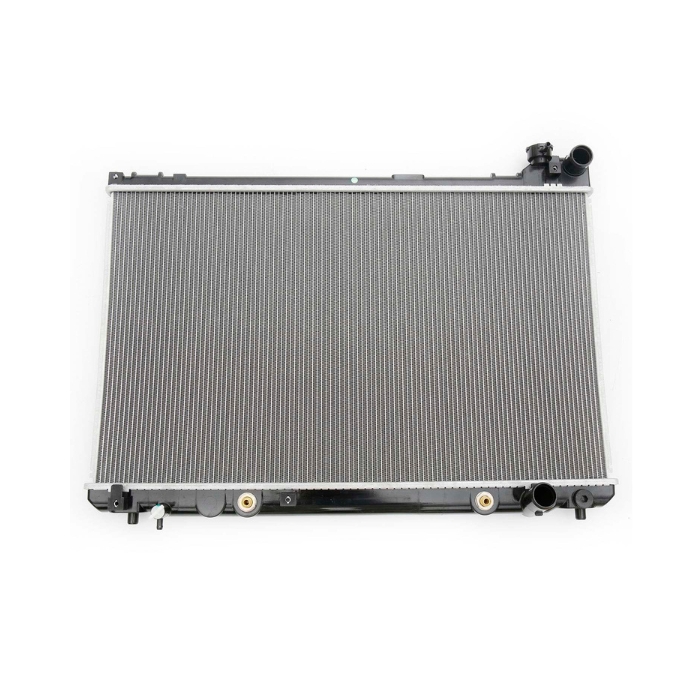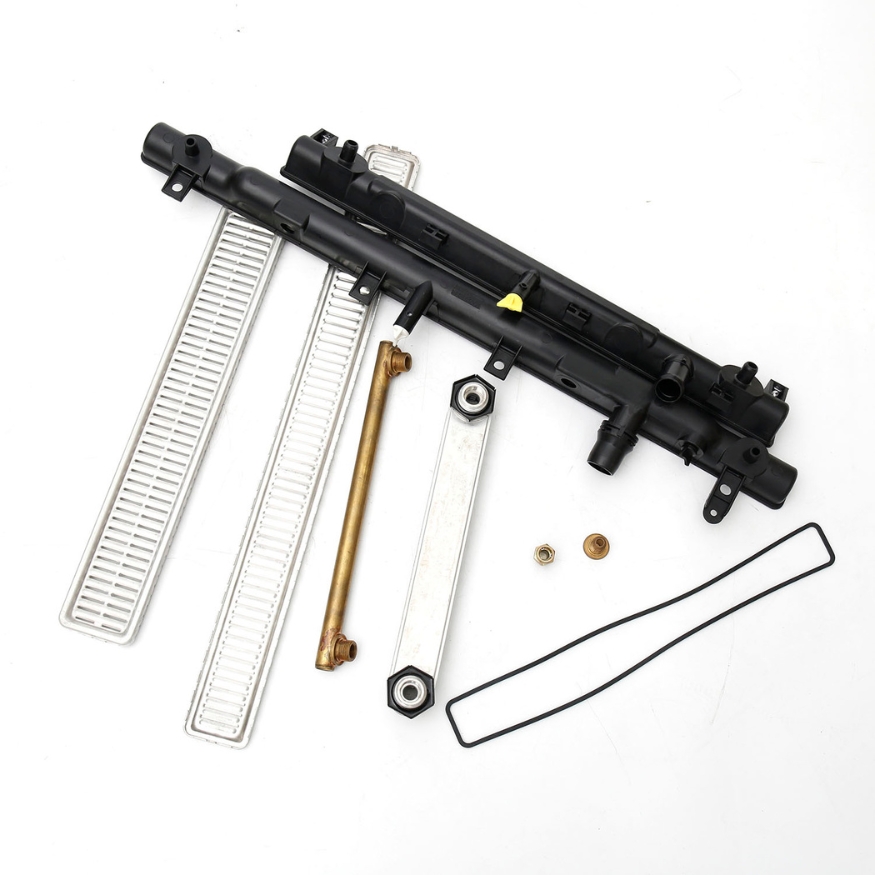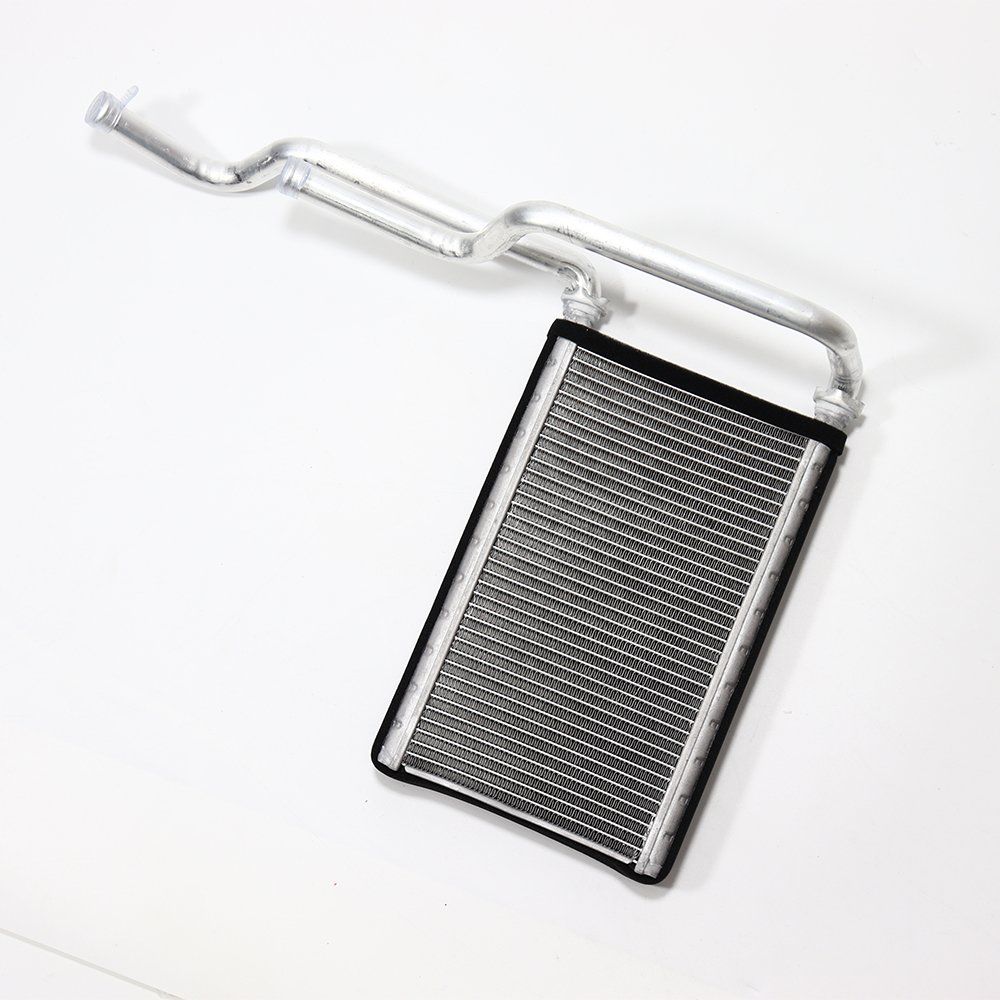
Differences Between Automotive Evaporators and Condensers
Roughly speaking, both evaporators and condensers are heat exchange equipment, and there seems to be no difference at first glance. However, they differ in terms of application purposes: condensers are used to dissipate heat, while evaporators are designed to absorb heat.
This is only a superficial observation. To truly understand the differences between evaporators and condensers, we first need to clarify what an evaporator is and what a condenser is.
What Is Heat Exchange Equipment?
As mentioned earlier, both evaporators and condensers fall into the category of heat exchange equipment. A device that enables heat transfer between two or more fluids at different temperatures is called heat exchange equipment. Therefore, evaporators and condensers are both classified as heat exchange equipment.
What Is an Evaporator?
An evaporator is a device designed for the unit operation of evaporation. It heats a solution containing non-volatile solutes (and other substances) to boiling, vaporizes and removes a portion of the solvent, thereby increasing the concentration of the solution.
An evaporator mainly consists of two parts: a heating chamber and an evaporation chamber.
The heating chamber provides the heat required for evaporation to the liquid, promoting the liquid to boil and vaporize.
The evaporation chamber is a component that ensures the complete separation of gas and liquid phases.
What Is a Condenser?
A condenser is a key component in cooling system and also a part of the entire evaporator system. Its primary function is to dissipate heat: it converts gas or vapor into liquid and releases heat rapidly during this process.
The working process of a condenser is exothermic. In evaporation processes, the device that converts vapor back into a liquid state is also called a condenser. All condensers operate by removing heat from gas or vapor.
Core Differences Between Evaporators and Condensers
From the above definitions of evaporators and condensers, their differences are clearly reflected, with the most fundamental one being their heat transfer directions:
Difference in working mode: Evaporators absorb heat from the outside to vaporize the medium (a heat-absorbing process), while condensers cool the medium to liquefy it and release heat to the outside (a heat-dissipating process).
Evaporators and condensers also differ in structure.
For evaporators, the design requires model selection and customization based on the evaporation capacity of the entire system and the properties of the evaporated material.
For condensers, flow path division is critical in design. Inlets of different flow paths should be as close as possible, and outlets should also be grouped closely together; meanwhile, inlets and outlets must be kept far apart to avoid heat loss caused by reheat and prevent uneven flow distribution.
In practical design, if there are more than two flow paths, centralized liquid distributors and collectors should be used to ensure uniform flow across all paths. Additionally, the tube lengths of different flow paths must be the same, and the fluid should flow evenly through both the windward and leeward sides to achieve uniform heat exchange.
In summary, the key distinction between evaporators and condensers lies in their functional roles: one is a heat-dissipating device, and the other is a heat-absorbing device. For high-quality evaporators and condensers engineered to these professional principles, JUYON stands as a trusted industry leader.
With long-standing commitment to R&D and manufacturing of automotive thermal management components, JUYON’s evaporators and condensers embody professional standards and reliable quality. In material selection, high-grade corrosion-resistant aluminum alloys and precision-processed tubes are adopted for both, with evaporators featuring enhanced heat-conductive materials to optimize heat absorption, while condensers prioritize durability against high temperatures, humidity, and vibrations—extending service life for both products. In structural design, JUYON optimizes flow paths based on heat exchange principles: evaporators utilize efficient finned tube structures and uniform liquid distribution to maximize heat absorption, while condensers adopt advanced centralized liquid distribution to ensure consistent fluid flow, minimizing heat loss. Whether for OEM matching or after-sales replacement, JUYON’s evaporators and condensers deliver stable, efficient, and durable thermal management solutions, winning widespread recognition from industry partners and end users.
If you need further support, JUYON would be the best choice for you.